

Aomori Nebuta Festival


Every summer, the streets of Aomori come alive with towering illuminated floats depicting fearless warriors, mythical creatures, gods, and legendary heroes. Drums thunder through the evening air, flutes echo between buildings, and thousands of dancers leap through the crowds, chanting in celebration as glowing works of art make their way through the city. This is the Aomori Nebuta Festival, one of Japan's most spectacular and visually unforgettable celebrations.
Held annually from August 2 through August 7 in Aomori City, the Nebuta Festival draws millions of visitors each year and has become one of the country's most famous summer festivals. While its enormous lantern floats are its most recognizable feature, the festival is far more than a dazzling parade. It is a celebration of community, craftsmanship, folklore, and traditions that have been passed from one generation to the next for centuries.
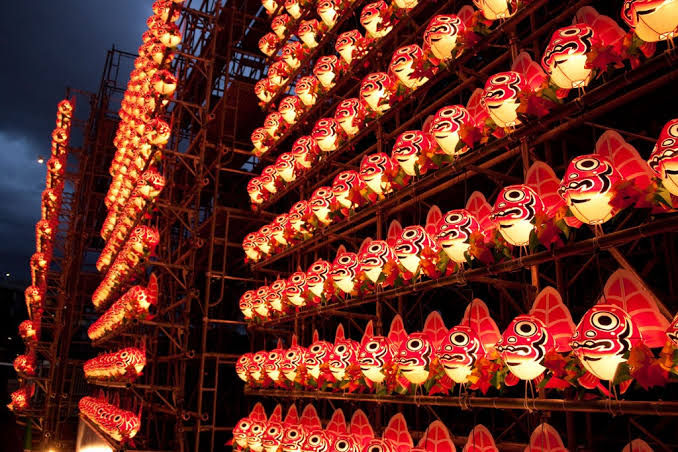
The exact origins of the Aomori Nebuta Festival remain uncertain, but historians generally believe its roots lie in a combination of the ancient Tanabata festival, local harvest customs, and rituals intended to drive away drowsiness and evil spirits during the busy agricultural season. One popular explanation suggests that farmers created lanterns and processions to symbolically cast away sleepiness before the demanding harvest months, ensuring they remained energetic and productive.
Another well-known tradition connects the festival to the early ninth-century general Sakanoue no Tamuramaro. According to legend, he used drums, flutes, and brightly lit displays to confuse or lure enemy forces during military campaigns in northern Japan. Although this story became so popular that the festival once awarded a Tamuramaro Prize to its finest float, historians generally regard the account as legendary, noting that there is little evidence Tamuramaro campaigned in what is now Aomori Prefecture.
A third explanation focuses on the word Nebuta itself. One regional tradition links the name to the Emishi leader Aterui, who resisted imperial expansion for more than a decade before his capture and execution. According to this interpretation, the festival preserves symbolic memories of Aterui's followers and their tragic fate. Some even suggest the energetic stomping performed by dancers recalls this history. While this theory remains debated among scholars and is not widely accepted as the festival's origin, it demonstrates how deeply local history and folklore have become intertwined with Nebuta's identity.
The name "Nebuta" itself is thought to be connected to the Japanese word nemutai, meaning "sleepy." According to this interpretation, the festival developed as a symbolic way of banishing fatigue and welcoming renewed energy during the height of summer. Although scholars continue to debate the festival's precise beginnings, its connection to seasonal renewal and communal celebration has remained remarkably consistent.
At the heart of the festival are the magnificent nebuta floats. Constructed from wooden frameworks covered with washi paper and illuminated from within, these enormous lantern sculptures often reach several meters in height and width. Skilled artisans spend months designing, painting, and assembling each float by hand. Every year, entirely new creations emerge, transforming historical figures, scenes from Japanese mythology, kabuki theater, folklore, and even famous literary characters into glowing works of moving art.

As darkness falls, the floats take on an almost magical quality. Brilliant reds, blues, golds, and greens illuminate the night, creating the illusion that the warriors and mythical beings are springing to life as they glide through the streets. Yet the floats are only part of the spectacle.
Surrounding them are the haneto, energetic dancers dressed in brightly colored traditional costumes adorned with bells and ribbons. Rather than performing carefully choreographed routines, the haneto skip, leap, and dance exuberantly while repeatedly calling out "Rassera! Rassera!" Their infectious enthusiasm encourages spectators to become participants, and visitors are welcome to join the dancing if they wear the appropriate costume. This openness helps create one of the festival's most joyful traditions: the line between performer and audience often disappears.
The music accompanying the parade is equally important. Powerful taiko drums establish a rhythmic heartbeat, while flutes and hand cymbals create melodies that have become synonymous with the festival itself. Together, the music, dancing, and illuminated floats transform the streets into an immersive celebration of movement, light, and sound.
Although the festival is unmistakably festive, many of its artistic themes draw upon Japan's rich cultural heritage. Samurai heroes, legendary generals, dragons, spirits, and scenes from classical literature frequently appear on the floats. Some depict famous episodes from Japanese history, while others reinterpret myths in bold and dramatic ways. Every float tells a story, inviting viewers to appreciate both the artistry and the cultural traditions behind its creation.
On the festival's final evening, the celebration concludes with one of its most breathtaking events. Selected illuminated floats are placed aboard boats and paraded across Aomori Bay while fireworks burst overhead, reflecting off the water in a spectacular display that brings the week's festivities to a memorable close. The combination of glowing lanterns, shimmering reflections, and brilliant fireworks creates an unforgettable finale to one of Japan's most beloved celebrations.
The Aomori Nebuta Festival also highlights the remarkable craftsmanship that defines many traditional Japanese festivals. Float builders preserve techniques that have been refined over generations, blending historical methods with modern engineering to create structures that are both visually stunning and structurally sound. Their work demonstrates that festivals are not only celebrations but also living expressions of artistic heritage.
For visitors, Nebuta offers something rare: the opportunity to experience history not behind museum glass, but alive in the streets. The festival invites people to witness centuries-old traditions while participating in an event that continues to evolve with each passing year. Families gather, neighborhoods collaborate, artists showcase their talents, and communities reaffirm their shared identity through celebration.
Today, the Aomori Nebuta Festival stands as one of Japan's premier cultural events and a powerful reminder that festivals can preserve history while remaining vibrant and relevant. Its illuminated giants, joyful dancers, and unforgettable music celebrate far more than artistic achievement—they celebrate the enduring human desire to gather together, tell stories, and transform ordinary streets into places of wonder.
As the glowing floats disappear into the summer night and the final fireworks fade above Aomori Bay, one thing becomes clear: some traditions endure not because they resist change, but because each generation finds new ways to bring them brilliantly to life.
Visitors who cannot attend the festival in August can still experience its artistry at the Nebuta Museum WA RASSE. Located near Aomori Station, the museum displays full-sized Nebuta floats from previous festivals, explores their construction, and introduces visitors to the music, dance, and traditions that have made Nebuta one of Japan's most celebrated cultural events. Interactive exhibits and live performances allow guests to experience the spirit of the festival throughout the year.

If you enjoyed exploring the history behind this ancient celebration, you'll find hundreds more fascinating holidays waiting to be discovered in my Incredibly Strange & Completely Random Holidays series. From forgotten Roman festivals and ancient Greek rites to Japanese traditions, medieval observances, and quirky modern celebrations, each volume uncovers the stories, myths, and customs that have shaped cultures around the world.
More than just a holiday guide, the series is filled with historical insights, folklore, recipes inspired by seasonal traditions, fun trivia, and unique ways to celebrate throughout the year. Whether you're a history enthusiast, mythology lover, educator, or simply curious about the world's most unusual celebrations, there's always another remarkable holiday waiting just around the corner.


Comments