

Tanabata: Japan's Star Festival of Wishes, Love, and the Meeting of the Heavens

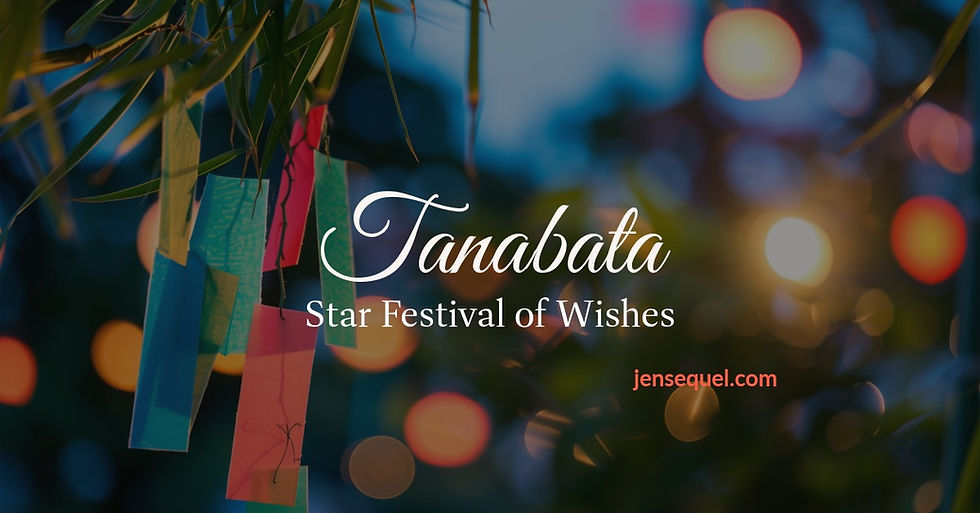
Every summer, colorful strips of paper flutter from bamboo branches across Japan, carrying handwritten wishes toward the sky. Streets become adorned with vibrant streamers, towns host lively festivals, and families gather beneath the stars to celebrate one of Japan's most beloved seasonal traditions: Tanabata, the Star Festival.
Observed annually on July 7—though some regions celebrate according to the lunar calendar in August—Tanabata blends astronomy, folklore, and centuries of cultural tradition into a celebration unlike any other. At its heart is a timeless story of love, separation, and the hope that even the greatest distances can be overcome.
The origins of Tanabata trace back more than a thousand years to the Chinese Qixi Festival, which was introduced to Japan during the Heian period (794–1185). Over time, the celebration merged with native Japanese customs and court traditions, eventually evolving into the festival celebrated today. Although its roots lie in ancient China, Tanabata has become distinctly Japanese, celebrated in schools, homes, shrines, and communities throughout the country.
The festival centers on the legendary lovers Orihime, the Weaving Princess, and Hikoboshi, a humble cowherd. According to the tale, Orihime, the daughter of the Sky King, spent her days weaving beautiful cloth along the heavenly river known as the Milky Way. Though diligent in her work, she longed for companionship. Her father arranged for her to meet Hikoboshi, and the two quickly fell deeply in love.
Their happiness, however, came at a cost. So captivated were they by one another that they neglected their responsibilities. Orihime stopped weaving, while Hikoboshi allowed his cattle to wander unattended across the heavens. Angered by their neglect, the Sky King separated them on opposite sides of the Milky Way, allowing them to reunite only once each year on the seventh day of the seventh month.
According to the legend, a flock of magpies forms a bridge across the celestial river if the skies are clear, allowing the lovers to meet for their long-awaited reunion. Should rain fall, the river swells, delaying their meeting until another year. Even today, rainy weather during Tanabata is sometimes poetically described as the tears of the separated lovers.
The story is more than a romantic folktale. It reflects themes that resonate across cultures: love balanced by responsibility, perseverance through hardship, and hope sustained despite separation. These enduring ideas have helped Tanabata remain relevant for centuries, even as Japan has modernized around it.
One of the festival's most recognizable traditions is the writing of wishes on small, colorful strips of paper known as tanzaku. Participants write hopes for the future—whether related to health, success, education, relationships, or personal dreams—and hang them from bamboo branches. Bamboo was traditionally believed to possess protective qualities and to grow quickly toward the heavens, making it a fitting messenger between the human world and the celestial realm.
The decorations accompanying the wishes are equally symbolic. Intricately folded paper ornaments represent prosperity, craftsmanship, good fortune, and long life. Colorful streamers symbolize Orihime's woven threads, honoring her role as a master weaver while celebrating creativity and artistic expression.
Across Japan, Tanabata is celebrated in different ways depending on the region. Some of the country's largest festivals feature elaborate decorations stretching across shopping streets, parades, fireworks, traditional music, and community celebrations. Cities such as Sendai have become especially famous for their spectacular Tanabata festivals, drawing visitors from around the world each summer.
Despite these large public celebrations, Tanabata retains an intimate quality. The simple act of writing a wish and hanging it on a bamboo branch remains the heart of the festival. It transforms private hopes into shared expressions of optimism, connecting individuals to a tradition that has endured for more than a millennium.
What makes Tanabata particularly compelling is its remarkable balance between myth and everyday life. It looks upward to the stars while remaining deeply rooted in human experience. The festival asks participants to dream, but it also quietly reminds them that dreams require patience, dedication, and responsibility—the very lessons learned by Orihime and Hikoboshi.
For modern readers, Tanabata offers a refreshing perspective on celebration. Rather than commemorating conquest or historical victory, it honors hope itself. It invites people to pause, reflect upon their aspirations, and believe that even impossible distances may someday be crossed.
In the end, Tanabata is far more than a festival of stars. It is a celebration of longing, perseverance, and possibility. As colorful wishes sway gently from bamboo branches beneath the summer sky, they serve as quiet reminders that the future is still unwritten—and that sometimes the most meaningful traditions are those that encourage us to keep reaching toward it.

If you enjoyed learning about Tanabata, you'll find many more fascinating celebrations from around the world in my Incredibly Strange & Completely Random Holidays series. From forgotten Roman festivals and ancient Greek rites to mysterious seasonal traditions and cultural celebrations that have shaped civilizations, each volume explores the remarkable stories behind the holidays that history nearly forgot. The series is available now on Amazon.


Comments