

Serapia

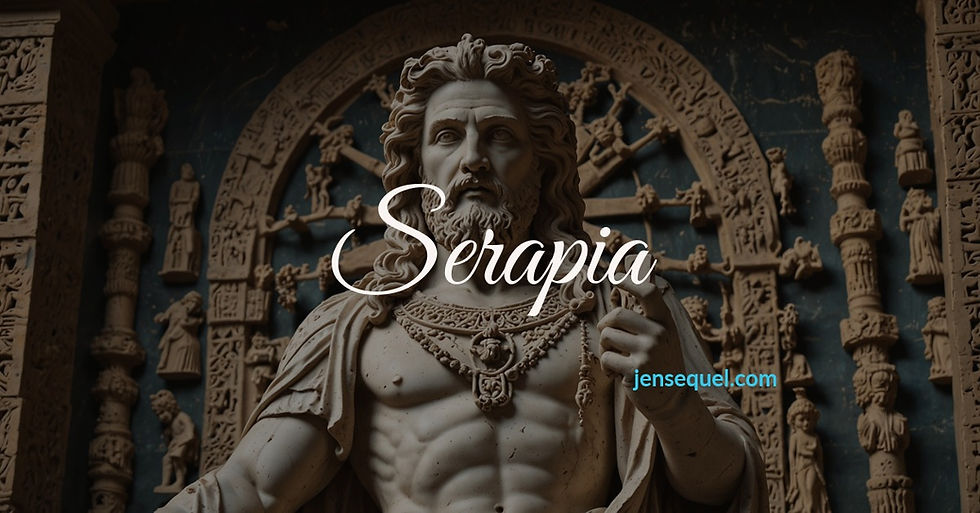
Among the lesser-documented religious observances of ancient Rome, the festival known as Serapia—celebrated on April 25 alongside other agricultural rites—offers a fascinating glimpse into the layered and often overlapping nature of Roman religious life. Though not as widely attested in surviving sources as festivals such as Parilia or Robigalia, Serapia is generally understood as part of the broader seasonal cycle in which Romans sought divine favor for fertility, stability, and protection during the critical transition from spring into early growth season.
Serapia is closely associated with the cult of Serapis, a deity who emerged during the Hellenistic period as a fusion of Greek and Egyptian religious traditions. Introduced into Roman religious practice during the expansion of Rome’s cultural and political influence across the Mediterranean, Serapis represented a form of divine unity—combining aspects of Osiris, Apis, Zeus, and Hades into a single, multifaceted figure. His presence in Rome reflects the empire’s broader tendency to absorb and reinterpret foreign deities within its own religious framework.
Unlike older Roman agricultural festivals rooted in Italic pastoral traditions, Serapia carries a distinctly cosmopolitan character. It reflects the increasingly diverse spiritual landscape of Rome during the late Republic and Imperial periods, when foreign cults were not only present but often embraced by segments of Roman society. Serapis, in particular, was associated with healing, fertility, and the afterlife, making him a versatile and powerful figure within Roman devotional practice.
The festival’s placement in late April situates it within a dense cluster of agricultural and protective rites. Coming immediately after Robigalia and alongside other spring observances, Serapia likely contributed to the seasonal emphasis on safeguarding crops and ensuring the stability of the coming harvest. While detailed descriptions of ritual practices are limited, it is reasonable to assume that offerings, prayers, and possibly libations would have been made in honor of Serapis, seeking his favor over both human and agricultural prosperity.
In Rome, the primary center of Serapis worship was the Serapeum, a temple complex associated with healing and divine consultation. Within such spaces, worshippers would have engaged in rites that blended Greek, Egyptian, and Roman religious traditions, reflecting the syncretic nature of the god himself. This blending is one of the defining features of Serapia as a concept: it is not a purely Roman invention, but rather a reflection of Rome’s role as a cultural crossroads.
Ancient writers such as Tacitus and Plutarch reference the growing presence of Egyptian and Eastern cults in Roman religious life, often noting both fascination and unease among traditionalists. Serapis, however, was one of the more widely accepted of these foreign deities, partly because his attributes aligned well with existing Roman values of order, fertility, and divine authority.
What makes Serapia particularly interesting within the Roman calendar is its subtle integration into an otherwise heavily agricultural season. Unlike purely pastoral festivals such as Parilia or Robigalia, Serapia introduces a more philosophical and cosmopolitan dimension to late April observances. It reflects not only concern for crops and livestock, but also for spiritual balance, healing, and the unseen forces governing human fate.
For modern readers, Serapia serves as a reminder that Roman religion was never static or purely local. It evolved continuously, shaped by conquest, trade, and cultural exchange. The inclusion of Serapis within the Roman ritual landscape illustrates how flexible and adaptive Roman spirituality could be, capable of incorporating foreign gods without losing its structural coherence.
Though Serapia remains one of the more obscure entries in the Roman festival calendar, its significance lies in what it reveals about the nature of Roman belief itself. It demonstrates that even in a society deeply rooted in tradition, there was always room for new divine voices—especially those that promised healing, protection, and a measure of control over an uncertain world.


Comments