

Plynteria: The Ancient Athenian Festival When Athena's Temple Fell Silent

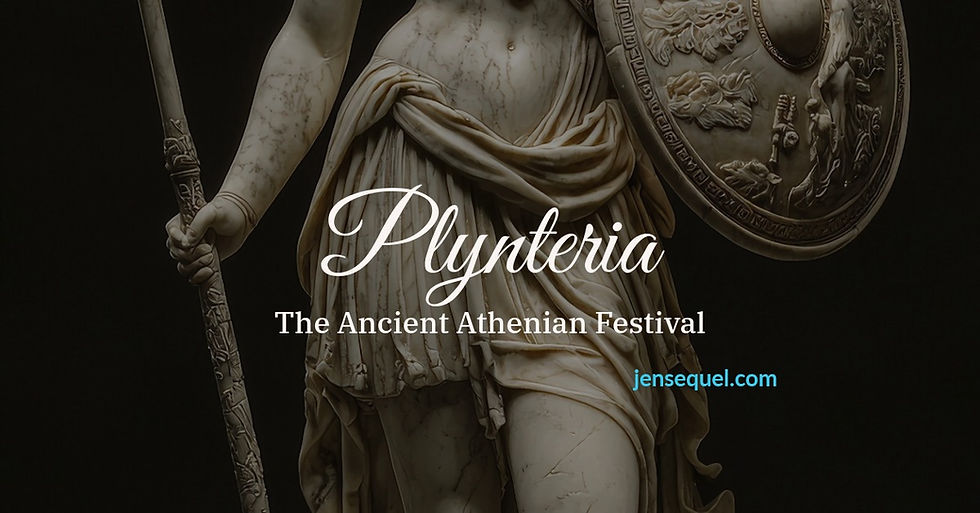
Among the religious festivals of ancient Athens, few carried a reputation as unsettling as Plynteria. While many Greek celebrations were marked by public gatherings, sacrifices, and festive processions, Plynteria was associated with purification, temporary withdrawal, and a sense of vulnerability. Dedicated to Athena, the patron goddess of Athens, the festival centered on the ritual cleansing of her sacred image and was regarded by many Athenians as an unlucky day.
Observed annually during the month of Thargelion, Plynteria was one of several festivals devoted to maintaining the relationship between Athens and its divine protector. Unlike celebrations that sought blessings through offerings and feasting, this observance focused on renewal through purification. It acknowledged that even the most sacred objects required periodic care and restoration.

The name Plynteria derives from the Greek word meaning "to wash" or "to cleanse," reflecting the central ritual of the festival. At its heart was the ancient wooden cult statue of Athena Polias, one of the city's most revered religious treasures. Long before the magnificent marble sculptures of the Acropolis became symbols of Athens, this sacred image served as a focal point of devotion and civic identity.
During Plynteria, the statue was stripped of its garments and ornaments and ceremonially washed. The task fell to a group of women known as the Praxiergidae, who were entrusted with the care of Athena's sacred image. Once the statue had been veiled and removed from public view, the goddess was considered temporarily absent from her sanctuary.
This withdrawal had profound symbolic implications. Ancient Athenians viewed Athena not merely as a deity who received worship but as an active guardian of the city. If her image was hidden and her sanctuary temporarily suspended from normal religious activity, Athens itself was believed to be deprived of her protection. As a result, Plynteria acquired a reputation as an inauspicious day.
Ancient sources suggest that public business was often avoided during the festival. Military ventures, important political decisions, and other significant undertakings were considered ill-advised while Athena's presence was symbolically withdrawn. The city entered a brief period of ritual uncertainty, waiting for the goddess to be restored to her rightful place.
This atmosphere of unease reveals an important aspect of ancient Greek religion. Purification was not always viewed as comforting or celebratory. Before renewal could occur, there had to be a temporary dismantling of normal order. Sacred objects were removed from use. Ritual spaces were disrupted. The familiar structures that provided stability were momentarily suspended.
Plynteria was closely connected to Kallynteria, another Athenian festival dedicated to the cleaning and renewal of Athena's temple. Together, the two observances formed a cycle of sacred maintenance. Kallynteria focused on the temple itself, while Plynteria concentrated on the goddess's image and garments. Both reflected the belief that devotion required ongoing stewardship rather than occasional acts of worship alone.
For modern readers, Plynteria offers a fascinating glimpse into how ancient societies understood renewal. Today, cleansing rituals are often associated with fresh beginnings and positive transformation. The Athenians, however, recognized that renewal could also involve discomfort. Before something could be restored, it first had to be taken apart, cleaned, and temporarily removed from its familiar role.
The festival also highlights the remarkable relationship between religion and civic identity in Athens. The washing of a sacred statue was not simply a religious ceremony. It was an event that affected the entire city. The condition of Athena's image reflected the condition of Athens itself, reinforcing the idea that divine favor and civic well-being were inseparable.
What makes Plynteria particularly memorable is its unusual combination of care and uncertainty. It was a festival devoted to preservation, yet one marked by temporary absence. It sought renewal, yet inspired caution. In many ways, it acknowledged a truth that remains relevant today: that maintenance and restoration often require periods of disruption before stability can return.
Though overshadowed by more famous festivals of the Greek calendar, Plynteria remains a powerful example of how the ancient Athenians understood sacred responsibility. It reminds us that devotion was not only expressed through celebration, but also through the careful, sometimes unsettling work of renewal. By washing and restoring the image of Athena, the people of Athens reaffirmed their connection to the goddess who stood at the heart of their city—and awaited the moment when her protection would once again be fully restored.


Comments