

May Day Superstitions, Flowers, and Forgotten Customs

May Day sits in that strange space between spring celebration and something older, wilder, and faintly uncanny. Long before it became associated with maypoles and floral festivals, it was a night—and morning—filled with superstition, protective rituals, and customs meant to coax fertility from the land while keeping unseen forces at bay.
In the older European folk tradition, May Day was closely tied to the turning of the seasons, when the world was thought to be most alive with hidden energies. This was not just a cheerful celebration of spring; it was a threshold moment. The veil between the human world and the spirit world was believed to be thin, and people behaved accordingly.
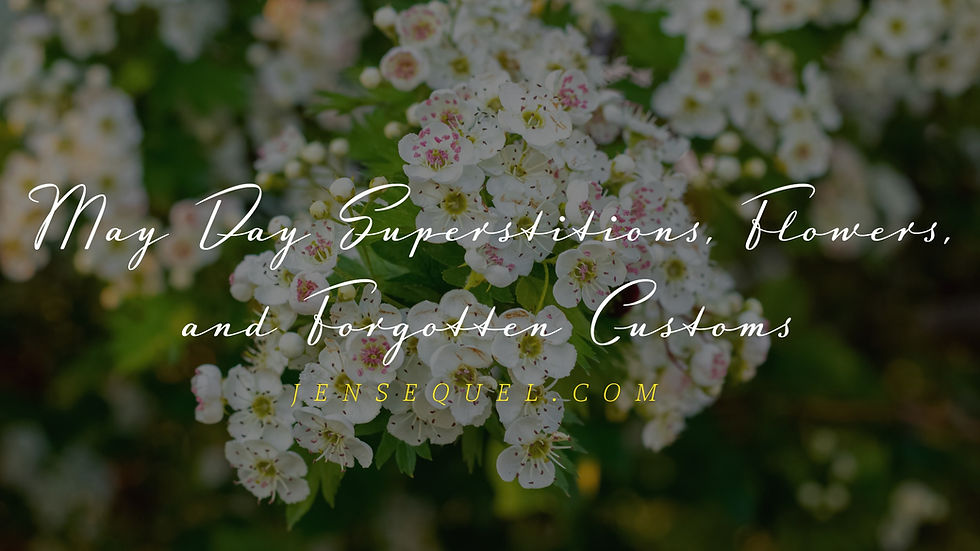
One of the most enduring customs associated with May Day is the gathering of flowers, particularly hawthorn blossoms. Hawthorn itself carried a complicated reputation in folklore. While it symbolized fertility and springtime renewal, it was also associated with the fae and considered dangerous to bring indoors in some regions. Despite this, branches were often collected at dawn and used to decorate doorways, windows, and barns. The act was both celebratory and protective, a way to invite good fortune while warding off mischief from unseen forces that were believed to roam freely during this time of year.

Morning dew collected on May Day also held special significance. Known in some traditions as “May dew,” it was believed to have restorative and beautifying properties. Women would wash their faces in it at sunrise, hoping to preserve youth, attract love, or ensure good fortune for the coming year. In agricultural communities, rolling in the dew or allowing livestock to graze early was thought to bring health and fertility to both animals and land. It was a kind of natural magic rooted in observation and belief, where the earth itself was briefly considered enchanted.
Floral customs extended beyond decoration and ritual washing. In some regions, people created garlands, crowns, or small posies to hang on doors as protective charms. Flowers were not simply aesthetic; they were symbolic offerings. Blossoms like hawthorn, primrose, and bluebell were often chosen for their associations with spring awakening, but also for their believed ability to influence luck, love, and protection. These floral arrangements were sometimes referred to in older dialects simply as “May flowers” or “May blossoms,” though they functioned less as decoration and more as seasonal talismans.

There were also quieter, more forgotten customs tied to May Day that reveal its deeper folkloric roots. In parts of Britain and Europe, people would leave small offerings at boundary stones, wells, or trees thought to be inhabited by spirits or fair folk. Milk, bread, or ribbons might be left as a sign of respect or negotiation, acknowledging that the natural world was not entirely human territory. In return, good harvests or protection from misfortune were hoped for. These gestures reflect an older worldview in which land, water, and forest were alive with agency.
Even the early morning timing of May Day rituals carried meaning. Rising before sunrise was thought to increase the potency of any act performed that day. Whether gathering flowers, washing in dew, or decorating homes, doing so before the sun fully rose symbolized a kind of purity and alignment with natural cycles. The first light of May Day was considered especially powerful, marking renewal not just of the season, but of personal fortune and vitality.
Over time, many of these customs softened into the more familiar Maypole dances and village festivities associated with later celebrations. Yet beneath the ribbons and songs, traces of the older beliefs remain. The flowers, the morning rituals, and the quiet reverence for the unseen world all point to a time when spring was not only welcomed, but carefully negotiated with.
May Day, in its oldest form, was never just about celebration. It was about balance—between growth and decay, seen and unseen, human and natural worlds. And like many seasonal traditions, its most powerful meanings often linger just beneath the surface, half-remembered in petals, dew, and folklore.


Comments